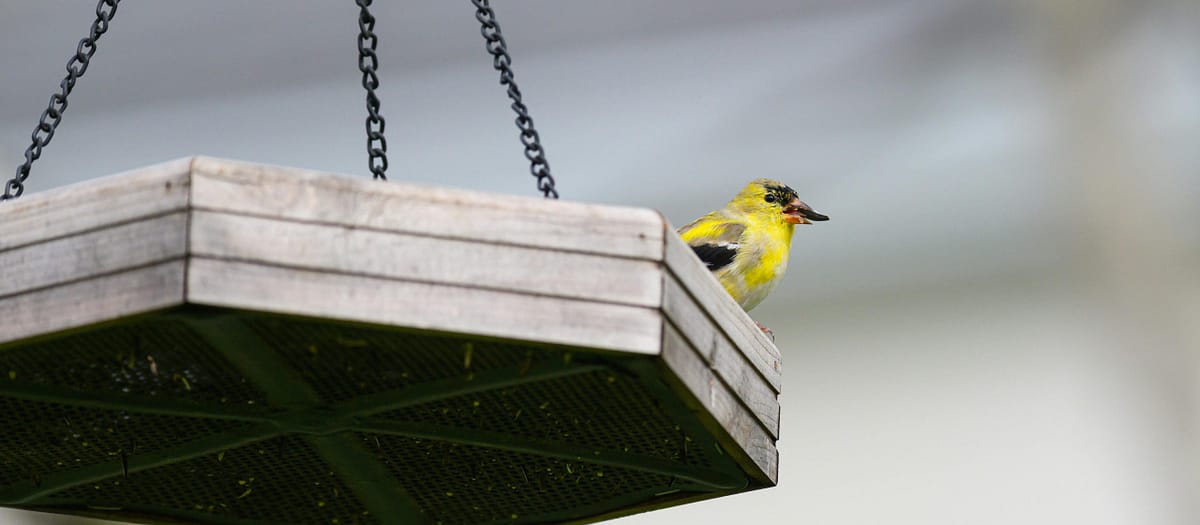
If you want to attract goldfinches to your yard, you’re in luck — these bright yellow birds are one of the most rewarding species to host at a backyard feeder. But getting them to show up consistently takes the right setup. This guide covers everything you need to know about how to attract goldfinches, from the right feeder type to the best seed, placement tips, and common mistakes to avoid.
How to Attract Goldfinches: Understanding What They Want
American Goldfinches are small, acrobatic birds with a strong preference for certain foods. Males are brilliant yellow in summer (turning olive-green in winter), while females are a muted yellow-green year-round. They travel in flocks and can descend on a feeder in numbers — which is exactly what you want.
To attract goldfinches consistently, you need three things working together: the right seed, the right feeder, and a welcoming habitat. Get all three right and you’ll have goldfinches visiting regularly from spring through fall — and often year-round in milder climates.
The Best Seed for Goldfinches: Nyjer Is Non-Negotiable
Goldfinches are finicky eaters. Their narrow beaks are perfectly adapted for extracting tiny seeds, and their #1 preference is nyjer seed (also called thistle seed). Nyjer is a small, oil-rich seed imported from Africa and Southeast Asia — it’s not actually related to common thistle plants, despite the name.
Why do goldfinches love it so much? Nyjer is high in fat and protein, making it ideal fuel for these active little birds. They’ll bypass sunflower and millet when nyjer is available. Check out our full breakdown of the best bird seed for goldfinches to understand exactly what to buy and what to avoid.
Important tip: Nyjer seed goes stale quickly — goldfinches will refuse old seed. Buy in smaller quantities and store in a sealed container. If your goldfinches stop visiting, stale seed is often the culprit.
Choosing the Right Feeder to Attract Goldfinches
Goldfinches won’t use just any feeder. They need a feeder specifically designed for small seeds with small ports. Here are the three best options:
Nyjer Tube Feeders
The classic choice. A nyjer tube feeder has tiny ports that dispense nyjer seed one piece at a time, which is exactly how goldfinches like to eat. Look for feeders with multiple ports so several birds can feed simultaneously — goldfinches are social and often arrive in groups.
Nyjer Mesh Socks
Fabric mesh socks filled with nyjer are inexpensive and beloved by goldfinches. The birds cling to the outside and pull seeds through the mesh. They’re disposable once empty, making them a great low-maintenance option.
Upside-Down Feeders
Goldfinches can feed upside down (most other birds can’t), so inverted feeders are a clever way to serve goldfinches exclusively while keeping less agile species away.
Avoid wide-port feeders designed for sunflower seeds — nyjer will pour out too fast and you’ll waste a lot. Also see our guide to bird feeder placement to position your goldfinch feeder for maximum visibility and safety.
Where to Place Your Goldfinch Feeder
Goldfinches prefer feeders that are:
- Hung in an open area where they can see approaching predators
- Near trees or shrubs for quick escape cover
- Away from heavy traffic areas that startle them
- At least 5–6 feet off the ground
Goldfinches are more tolerant of activity than some birds, but they still want clear sightlines. Don’t tuck the feeder behind a fence or dense shrubs — they want visibility in all directions while feeding.
Native Plants That Attract Goldfinches
The best long-term strategy to attract goldfinches is to plant native seed-producing plants that give them a natural food source. Goldfinches are especially attracted to:
- Coneflowers (Echinacea) — Let the seed heads dry on the plant and watch goldfinches flock to them
- Black-eyed Susans — Another excellent seed producer
- Sunflowers — Plant a patch and goldfinches will harvest the seeds directly
- Asters — Late-season seeds extend goldfinch feeding into fall
Native plantings also support insects and nesting habitat. If you want to upgrade your whole yard for birds, read our guide on understanding bird seed types to round out your feeding station.
When to Expect Goldfinches
In most of the US, goldfinches are year-round residents — but their visibility changes dramatically by season. Here’s what to expect:
- Spring/Summer: Males turn bright yellow and become very active. This is peak goldfinch season — you’ll see them constantly.
- Fall: Flocks increase as birds congregate before winter. Heavy feeder traffic.
- Winter: Males molt to olive-green. They’re still there, just harder to spot. Keep nyjer fresh and they’ll stay.
Goldfinches are late nesters — they don’t breed until July or August, when thistle plants go to seed. That’s why you may notice a spike in activity in late summer.
Common Mistakes When Trying to Attract Goldfinches
If goldfinches aren’t showing up, one of these is usually the cause:
- Stale nyjer seed — Replace seed every 2–3 weeks even if it hasn’t been eaten
- Wrong feeder — Standard tube feeders with large ports won’t work
- Feeder too close to noise/movement — Give them space
- No cover nearby — They need shrubs or trees within 10 feet
- Patience — It can take 2–3 weeks for goldfinches to discover a new feeder
If you’re just getting started with feeding birds, our beginner’s guide to setting up a bird feeding station walks you through everything step by step.
Want More Goldfinches? Try the Smart Feeder Option
If you want to really level up your goldfinch watching, a smart bird feeder with a built-in camera lets you watch and identify birds from your phone — even when you’re not home. These AI-enabled feeders are surprisingly fun and can help you track exactly which birds are visiting and when.
Frequently Asked Questions About Attracting Goldfinches
How long does it take for goldfinches to find a new feeder?
It typically takes 1–3 weeks for goldfinches to discover a new feeder, especially if you’re in an area where they haven’t been regulars. Be patient and keep the nyjer fresh. Placing the feeder near existing bird activity can speed things up — other birds visiting nearby will tip off passing goldfinches.
Do goldfinches eat sunflower seeds?
Yes, goldfinches will eat sunflower seeds — specifically hulled sunflower chips (not whole sunflower seeds with shells). Their beaks are small, so the thin shells of whole sunflower seeds are tough for them. Nyjer remains their strong preference, but a platform feeder with sunflower chips can attract goldfinches alongside other species.
Why did the goldfinches stop coming to my feeder?
The most common reason is stale nyjer seed. Goldfinches are very sensitive to seed freshness and will abandon a feeder if the nyjer goes bad. Try replacing all the seed and cleaning the feeder. Other causes include a new predator in the area (hawk or cat), a better food source nearby (natural seed plants going to seed), or a feeder that’s gotten dirty.
Use Our Free Bird Seed Finder
Not sure which seed to buy for goldfinches or your other backyard visitors? Try our free Bird Seed Finder — answer a few questions about the birds in your yard and it recommends exactly what to buy.
As an Amazon Associate, I earn from qualifying purchases. Links in this article may be affiliate links. Purchasing through them supports this site at no extra cost to you.
Leave a Reply