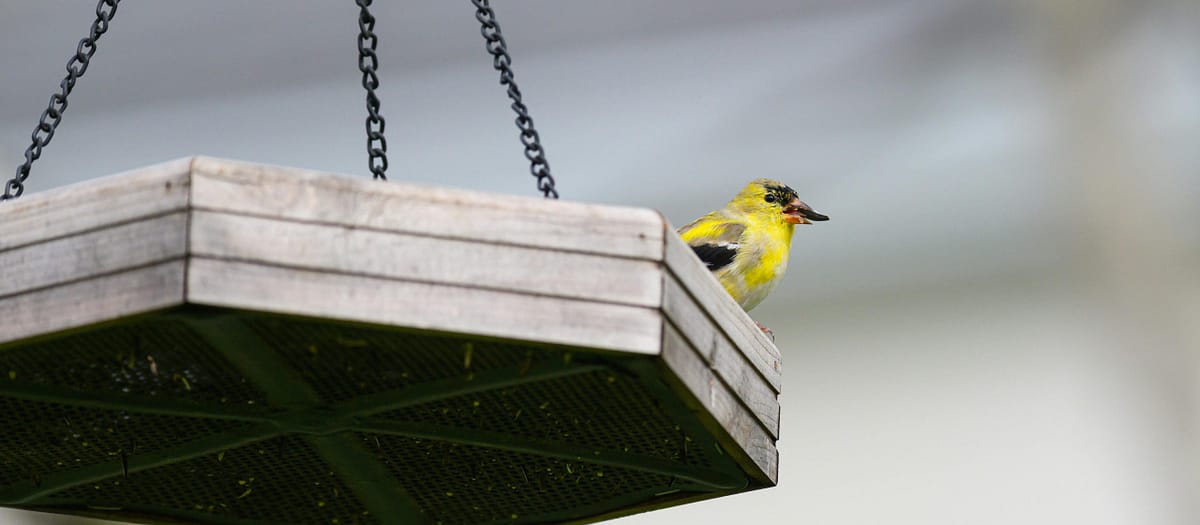
Walk down any pet or garden store aisle and you’ll find a wall of bird seed options — but what’s actually the difference? Knowing the types of bird seed and which birds prefer each one is the single most important thing you can do to attract more birds to your yard. Put out the wrong seed and you’ll get nothing (or worse, just squirrels). Get it right and your feeders will be busy from sunrise to sunset.
This guide breaks down every major bird seed type, which birds it attracts, and which feeder works best for each — so you never waste another bag of seed.
Why the Right Bird Seed Matters
Birds are picky eaters, and that’s actually a feature, not a bug. Each species evolved to prefer certain seeds based on the size of their beak, their foraging style, and their nutritional needs. A goldfinch’s tiny beak is perfectly designed for nyjer seed. A cardinal’s thick, powerful bill cracks open sunflower seeds effortlessly. When you match the seed to the bird, you’re essentially setting the table for exactly the guests you want.
If your feeders have been quiet lately, wrong seed is one of the top reasons birds aren’t showing up. Check out our guide on why birds aren’t coming to your feeder for a full troubleshooting breakdown.
The Most Common Types of Bird Seed Explained
1. Black Oil Sunflower Seeds
Best for: Cardinals, chickadees, nuthatches, finches, blue jays, titmice, grosbeaks
Black oil sunflower seeds are the undisputed MVP of bird feeding. Their thin shells are easy for almost any bird to crack open, and the high fat and protein content makes them a nutritional powerhouse — especially important during cold months and nesting season. If you could only put out one type of seed, this would be it.
They work in virtually every feeder type: tube feeders, hopper feeders, and platform feeders. The Bird Feeders for Outdoors Squirrel Proof Tube Feeder ($18.98) is a great budget-friendly option that handles sunflower seeds well and keeps squirrels at bay.
2. Nyjer (Thistle) Seed
Best for: American goldfinches, house finches, purple finches, pine siskins, redpolls
Nyjer — sometimes called thistle — is a tiny, oil-rich seed that finches go absolutely wild for. It’s one of the most expensive seeds per pound, but a little goes a long way since finches eat it slowly and precisely. One important note: nyjer seed requires a specialized finch feeder with small ports designed specifically for this tiny seed. Regular tube feeders will just dump it all out.
We wrote a deep dive on the best bird seed for goldfinches if you want to fully optimize your setup for finches.
Try the Kingsyard Metal Mesh Finch Feeder for Nyjer/Thistle ($21.99) — it’s purpose-built for nyjer, holds 2.5 lbs, and the metal mesh lets finches cling and feed naturally.
3. Safflower Seed
Best for: Cardinals, chickadees, doves, house finches
Avoided by: Squirrels, starlings, grackles
Safflower is the not-so-secret weapon of backyard birders who are fed up with squirrels. Most squirrels find safflower bitter and will leave it alone entirely. Cardinals, on the other hand, love it. If squirrels are raiding your feeders and you don’t want to invest in a squirrel-proof setup, switching to safflower is one of the easiest deterrents out there. It works well in tube feeders and hopper feeders.
4. White Proso Millet
Best for: Dark-eyed juncos, white-throated sparrows, song sparrows, towhees, doves, quail
White millet is the go-to seed for ground-feeding birds. Sparrows, juncos, and doves prefer to forage at or near ground level, so millet scattered on the ground or in a low platform feeder is ideal. It’s inexpensive and attracts a wide variety of species that tend to get overlooked at traditional tube or hopper feeders. Red millet is also available, but most birds strongly prefer the white variety — red millet often ends up untouched at the bottom of mixed bags.
5. Peanuts and Peanut Pieces
Best for: Blue jays, woodpeckers, nuthatches, chickadees, titmice, crows
Peanuts are high in protein and fat, making them especially popular in fall and winter when birds are building up energy reserves. Whole peanuts (in the shell) attract blue jays and larger birds. Shelled peanut pieces work in mesh feeders and draw in woodpeckers, nuthatches, and chickadees. Always use unsalted, dry-roasted or raw peanuts specifically sold for bird feeding — never salted or flavored varieties.
See our complete guide to the best bird seed for woodpeckers, where peanuts play a starring role alongside suet.
6. Cracked Corn
Best for: Doves, sparrows, juncos, quail, ducks, blackbirds, wild turkeys
Cracked corn is the budget-friendly bulk filler of bird feeding. It attracts ground-feeding birds and waterfowl, and it’s a great option if you want to keep larger birds occupied away from your finch or songbird feeders. However, it also attracts deer, raccoons, and squirrels, so placement matters. Use it sparingly in a platform feeder or scatter it in a designated area away from your main feeding station.
7. Mixed Seed Blends
Best for: General feeding stations attracting a variety of species
Not all mixed seeds are created equal. Cheap mixed blends are often padded with filler seeds — red millet, milo, oats — that most birds ignore. Those filler seeds end up on the ground, sprouting weeds and rotting. Look for premium mixes that contain primarily black oil sunflower, white millet, and peanut pieces. A quality blend in a platform feeder like the Large Hanging Bird Feeder Tray ($12.99) can attract a wide variety of species all at once. If you’re running a hopper feeder, the Kingsyard Metal Hopper Bird Feeder ($19.99) handles mixed seeds and sunflower perfectly with its dual-chamber design.
Adding a seed catcher tray ($17.80) under your feeder reduces waste from mixed blends and keeps your yard tidier.
Quick Reference: Which Birds Eat Which Seeds
| Seed Type | Top Birds Attracted | Best Feeder |
|---|---|---|
| Black Oil Sunflower | Cardinals, chickadees, finches, jays | Tube or hopper |
| Nyjer/Thistle | Goldfinches, house finches, siskins | Finch feeder (small ports) |
| Safflower | Cardinals, chickadees, doves | Tube or hopper |
| White Millet | Sparrows, juncos, doves, towhees | Platform or ground |
| Peanuts/Pieces | Jays, woodpeckers, nuthatches | Mesh or tray feeder |
| Cracked Corn | Doves, quail, blackbirds | Platform or ground |
| Mixed Blend (quality) | Variety of species | Hopper or platform |
Try Our Free Bird Seed Finder Tool
Not sure which seed is right for the birds in your area? Our free Seed Finder Tool lets you select the birds you want to attract and instantly recommends the best seed types for your specific backyard. It takes about 30 seconds and gives you a personalized feeding plan.
🌱 Try the Free Seed Finder Tool →
Frequently Asked Questions About Bird Seed Types
What is the best all-around bird seed?
Black oil sunflower seeds are the best all-around choice. They’re accepted by a wider variety of birds than any other single seed type, they’re high in fat and protein, and they work in almost every feeder style. If you want to keep things simple, fill your feeders with black oil sunflower and you’ll attract a healthy diversity of songbirds year-round.
Does it matter what type of feeder I use for different seeds?
Absolutely. Feeder type and seed type need to match. Nyjer seed requires a finch feeder with tiny ports — it will fall right through a standard tube feeder. Suet needs a cage-style suet feeder. Peanut pieces do best in mesh feeders that let birds cling and pick. Using the wrong feeder is one of the most common reasons new birders don’t see results from certain seeds.
Why are birds ignoring the seed I put out?
Several factors can cause birds to ignore seed: the wrong seed type for local species, stale or moldy seed, feeder placement (too close to the house or not near cover), or just a lack of bird awareness of a new feeder. It can take a few days to a few weeks for birds to discover a new feeding spot. Make sure your seed is fresh — old seed loses its oils and nutritional appeal quickly in heat and humidity.
Is cheap mixed bird seed bad?
Cheap mixed seed isn’t necessarily harmful, but it’s often wasteful. Budget blends are typically padded with filler seeds like red millet and milo that most songbirds refuse to eat. Those rejected seeds pile up on the ground, attract pests, grow weeds, and can become moldy. A small bag of quality black oil sunflower or nyjer will get better results than a large cheap mixed bag.
How long does bird seed stay fresh?
Stored properly in a cool, dry location in a sealed container, bird seed typically stays fresh for 6–12 months. Once seeds get wet or are exposed to prolonged humidity, they can mold within a few days. Always check your feeders after rain and remove any clumped or discolored seed. Smaller, more frequent refills are better than dumping in a huge amount that sits out all week.
[…] to understand the full range of seed options available? Our guide to the difference between bird seed types breaks down exactly what each seed attracts and when to use […]